
The Isles of Scilly Inshore Fisheries and Conservation Authority (IFCA) has been credited for providing partnership support for a 3-year marine life research project led by the University of Exeter, which found Scilly’s waters to be in “comparatively pristine condition, relative to the highly degraded wider Northeast Atlantic marine region.”
The study, also supported by Natural England, was led by PhD student Owen Exeter, and aimed to demonstrate the effectiveness of the video equipment used as a flexible and low-cost tool for marine studies elsewhere in the UK. It also sought to fill gaps in data on mobile marine species around Scilly and identify key areas of higher biodiversity within our archipelago’s Marine Protected Areas and wider waters.
As part of the Council’s Place, Economy and Environment directorate, the Isles of Scilly IFCA provided its patrol vessel Vigilant, operated by its officers, as the platform for the camera deployments for the project. IFCA officers also provided valuable local knowledge of the waters around Scilly, which are a notoriously difficult environment in which to carry out marine ecological surveys. As a result of the success of this partnership, the project’s findings can be used as an evidence base to draw on when considering fishery management measures.
An article about the project on the University of Exeter website cites fisheries management as one of the reasons our waters are in such comparatively good condition, explaining that, “While the site isn’t entirely untouched by human activity, the team describes it as one of the UK’s most ‘near-natural’ marine ecosystems – largely protected from destructive practices such as bottom trawling, and with relatively low human impact due to the archipelago’s small population and well-managed fisheries.”
Councillor Andrew Guy, Chairman of the Isles of Scilly Inshore Fisheries and Conservation Authority, said: “This project is an excellent example of work that can have a real effect on the protection of our fisheries and waters. Whilst I’m sure everyone will be pleased to see evidence of thriving marine life around the islands, we must be conscious that this is no time to take it for granted. Scilly has an opportunity to set an example to the rest of the country by continuing to manage its fisheries carefully and I very much hope that our IFCA can continue with research project partnerships of this nature, in order to fully establish an effective monitoring programme for the islands.”
Dr Owen Exeter added: "We are incredibly grateful to the Isles of Scilly IFCA for providing their expertise and assistance, and to the Council for its wider support of this exciting project. Marine research in challenging environments is always a collaborative effort, and we hope our results highlight the ecological importance of the archipelago as a key UK marine biodiversity hotspot.”
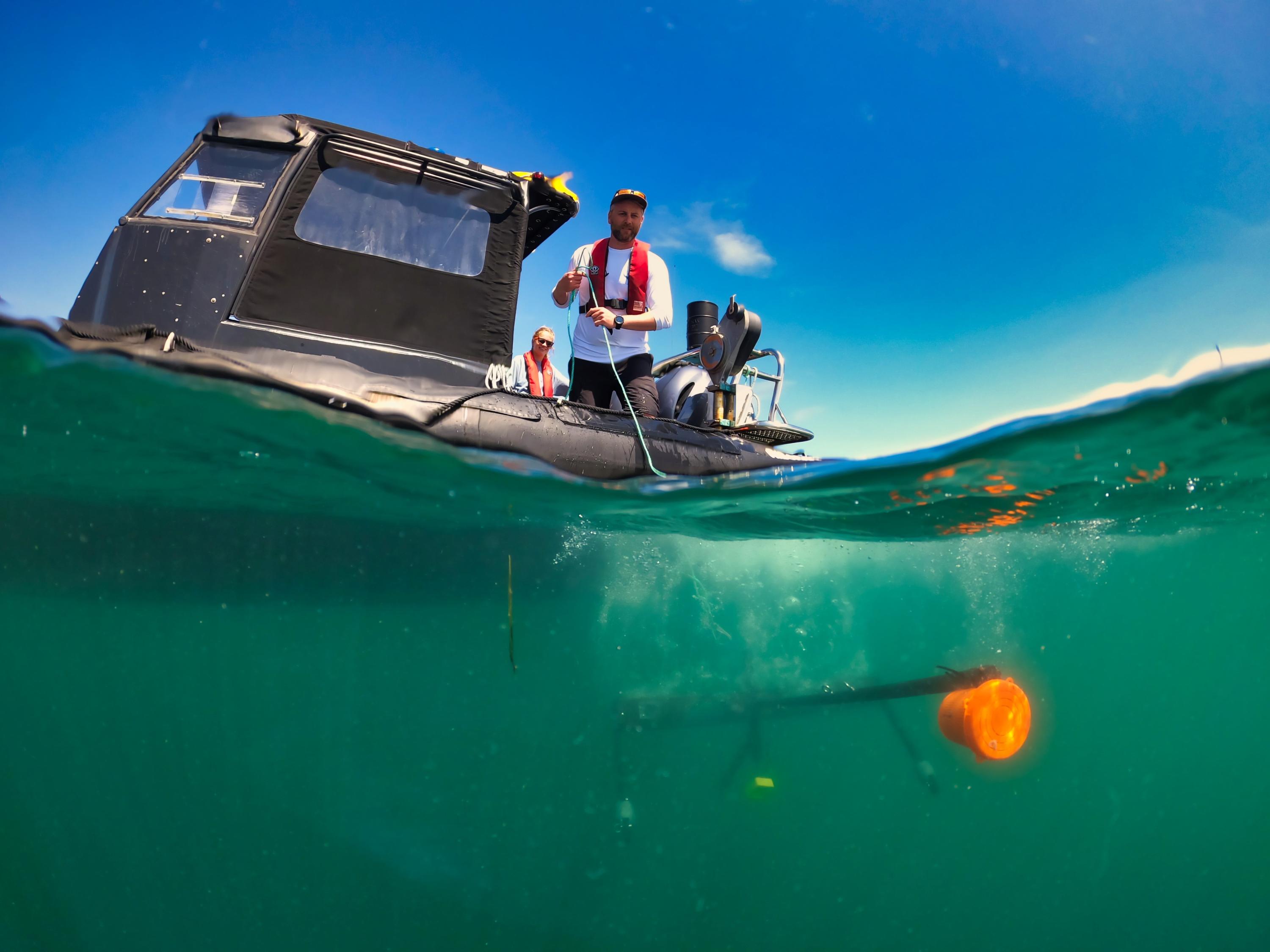
Image: Dr Owen Exeter of the University of Exeter deploying a Baited Remote Underwater Video from the Isles of Scilly IFCA boat